
Pag Island is famous for its otherworldly limestone landscapes, crystal-clear Adriatic Sea, beautiful beaches, Pag cheese and vibrant summer atmosphere. But beyond the coastline lies another side of the island that many visitors never fully discover: centuries of history hidden in fortresses, medieval towers, churches, archaeological sites and carefully planned stone streets – historic sites on Pag Island.
For travellers searching for the best historic sites on Pag Island, exploring the island can now be even easier thanks to HeritageMap, an interactive cultural-heritage map designed to help visitors discover historic locations, routes and walking approaches across Croatia.
Explore HeritageMap – Fortresses and Castles of Croatia
Instead of spending your entire holiday moving between beaches, dedicate at least one day to discovering the history behind the island.
You may be surprised by how much is hidden in Pag’s seemingly barren landscape.
And if you are planning a complete Pag holiday, our broader guide to the island covers beaches, nature, food and other experiences as well.
Things to Do in Pag Island – Complete Guide
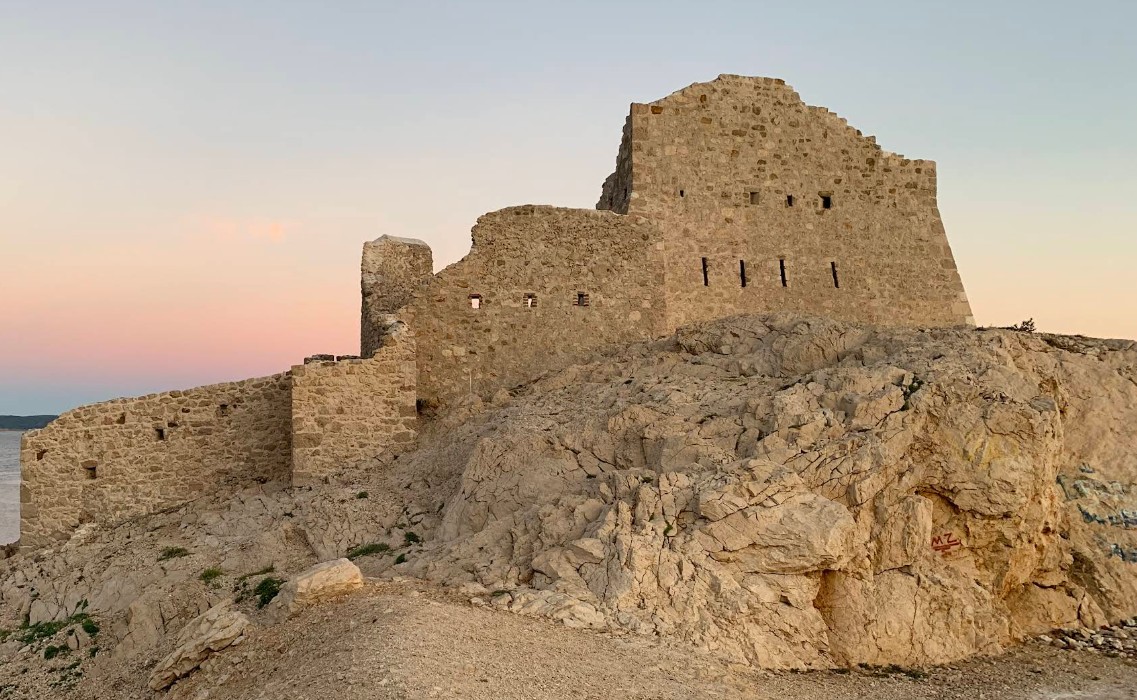
Fortica fortress near Pag Bridge is one of the most spectacular historic landmarks on Pag Island.
Why Pag Island Is Much More Than a Beach Destination – historic sites on Pag Island
Pag has been shaped by salt, trade, religion, fishing, agriculture and its strategic position in the Adriatic for centuries.
The historic centre of Pag is particularly remarkable. Construction of the present town began in 1443, following a Renaissance-style orthogonal urban plan. HeritageMap notes that this makes Pag one of the relatively rare planned towns of the Adriatic islands. Utvrde i dvorci Hrvatske
The town was once surrounded by defensive walls and towers. Although much of the fortification system disappeared during the 19th century, important elements of Pag’s architectural heritage remain.
This means that a walk through Pag is not simply a pleasant evening stroll.
You are walking through a town whose layout was deliberately designed almost six centuries ago.
1. Fortica Pag – The Fortress Guarding the Entrance to the Island – historic sites on Pag Island
One of the most dramatic historic sites on Pag Island is Fortica fortress.
Located close to Pag Bridge on the southern part of the island, the fortress was built in the 17th century at a strategically important point overlooking the sea passage between Pag and the mainland.
This maritime route was historically important for ships travelling between the northern Adriatic and Dalmatia, while merchant vessels also faced the threat of pirate attacks. Fortica therefore played an important role in controlling the passage. Grad Pag
Today, its military role has disappeared, but the location remains spectacular.
The pale stone ruins are surrounded by an almost lunar landscape, deep-blue Adriatic water and views towards the Velebit mountains.
For travellers arriving on the island via Pag Bridge, it is one of the best places to begin exploring Pag.
Why visit Fortica?
Come for the combination of history, photography and landscape.
Early morning and late afternoon provide especially dramatic light, while the contrast between the stone fortress and turquoise sea makes Fortica one of the most photogenic cultural landmarks on the island.
See our complete Things to Do on Pag Island guide
2. The Historic Centre of Pag – A Renaissance Town on an Adriatic Island – historic sites on Pag Island
The historic centre of Pag deserves much more time than many visitors give it.
Its development began in 1443 according to an ordered Renaissance urban plan built around intersecting streets and a central square. Around this heart of the town stand some of Pag’s most important historic buildings. Utvrde i dvorci Hrvatske
Rather than rushing through the old centre, explore it on foot.
Look beyond restaurants and cafés and notice the stone façades, narrow streets, old doorways, churches and fragments of the town’s former defensive structure.
Pag becomes especially atmospheric in the early morning before the summer streets become busy, or during the golden hour before sunset.
For travellers asking what to see on Pag Island beyond the beaches, Pag’s historic centre should be near the top of the list.
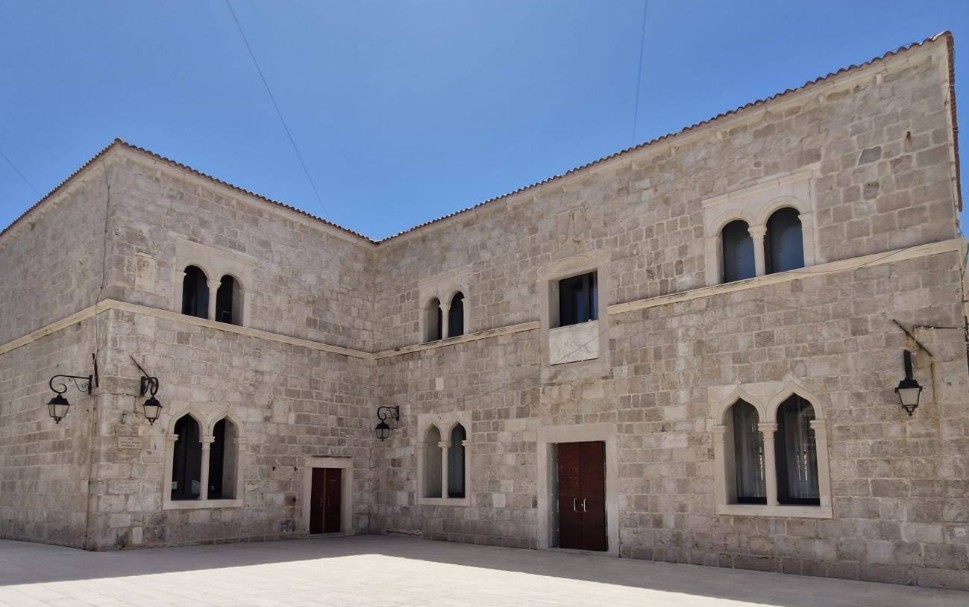
The historic centre of Pag reveals centuries of architecture, stone streets and cultural heritage.
3. Kula Skrivanat – The Last Surviving Defensive Tower of Pag – historic sites on Pag Island
Among the most important architectural reminders of medieval Pag is Kula Skrivanat.
The tower was built in the 15th century and is the only surviving tower of the nine that once formed part of Pag’s defensive system. The Tourist Board of the Town of Pag states that it has been preserved in its original form. Visit Pag
That makes Skrivanat much more than another picturesque stone building.
It is a surviving fragment of the fortified city that once protected Pag and its valuable economy.
Because it is located within the town, Kula Skrivanat can easily be combined with the main square, the Rector’s Palace and Pag’s historic churches.
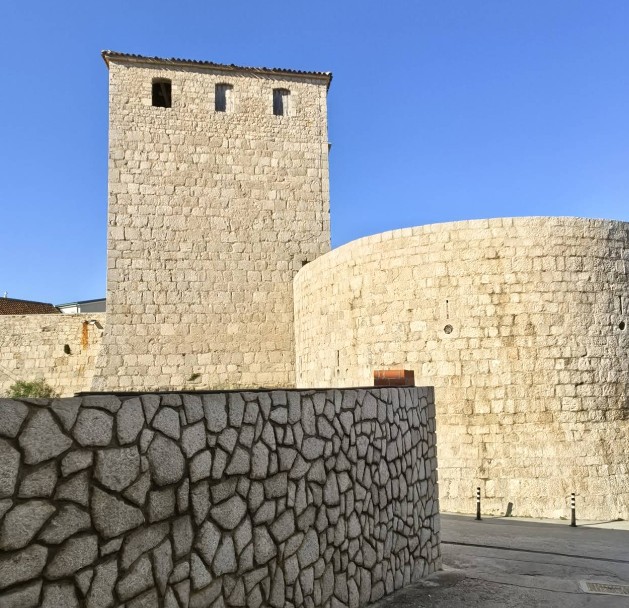
Kula Skrivanat is the last surviving tower of Pag’s former defensive system.
4. Old Town Pag – Discover the Town That Existed Before Modern Pag
Approximately one kilometre south of today’s town centre lies one of the island’s most fascinating historical locations: Stari Grad Pag, or Old Town Pag.
This was once a substantial and prosperous settlement.
Today it is an important archaeological site and sanctuary. Visitors can still see the Romanesque Church of St Mary as well as remains associated with the former Franciscan monastery. Visit Pag
Unlike the busy waterfront of modern Pag, Old Town Pag has a much quieter atmosphere.
The open landscape, stone ruins and historic religious buildings create a strong sense of place and make it one of the island’s most rewarding stops for travellers interested in archaeology and history.
It is also exactly the type of destination for which HeritageMap can be particularly useful: a culturally significant place that some visitors might otherwise pass without realising what is there.
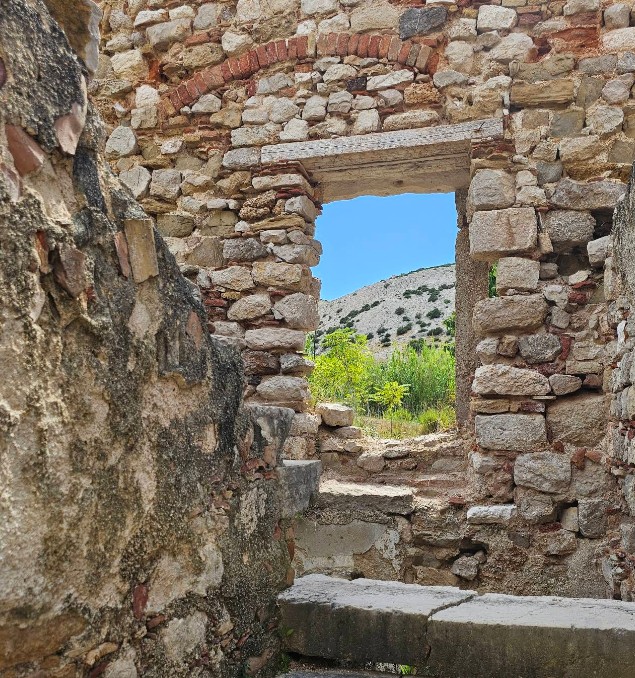
Old Town Pag is an archaeological and historic site just south of modern Pag Town.
5. Church of the Assumption – The Architectural Heart of Pag – historic sites on Pag Island
Standing on Pag’s main square is the Church of the Assumption of the Blessed Virgin Mary, one of the most important religious monuments in the town.
Its foundation stone was laid on 18 May 1443, the same year associated with the development of the new town of Pag. Visit Pag Mail
Its stone façade fits beautifully into the surrounding Renaissance urban fabric and makes the main square one of the essential stops on any historical walking tour of Pag.
Spend some time here rather than simply passing through.
The square provides one of the clearest opportunities to understand the deliberate urban planning behind the town.
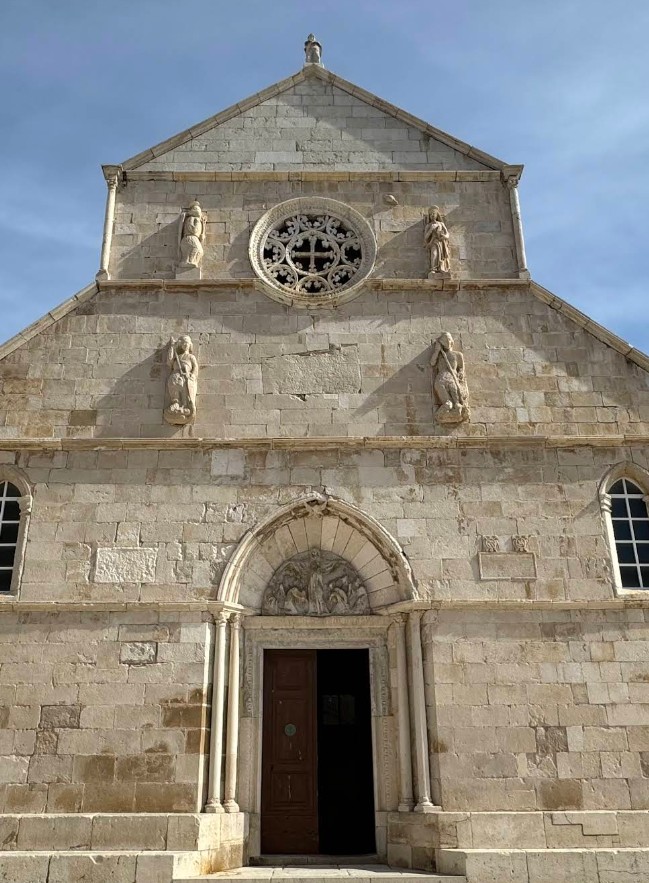
The Church of the Assumption stands at the heart of Pag’s historic Renaissance town centre.
6. Rector’s Palace and the Pag Lace Gallery – historic sites on Pag Island
Another important building on Pag’s main square is the Rector’s Palace, built in the 15th century and historically used as the centre of town and island administration. Visit Pag
Today this area also offers visitors an opportunity to discover one of Pag’s most internationally recognised traditions: Pag lace.
Croatian lacemaking traditions centred on Pag, Lepoglava and Hvar were inscribed on UNESCO’s Representative List of the Intangible Cultural Heritage of Humanity in 2009. Pag needle-point lace is particularly associated with the cultural identity of the town. Mednarodni register kulturne dediščine
UNESCO – Lacemaking in Croatia
The Pag Lace Gallery allows visitors to see examples of this centuries-old tradition and learn more about the extraordinary skill involved in producing it. Visit Pag
This is an excellent reminder that heritage is not limited to stone ruins and ancient buildings.
It also survives through skills, traditions and knowledge passed between generations.
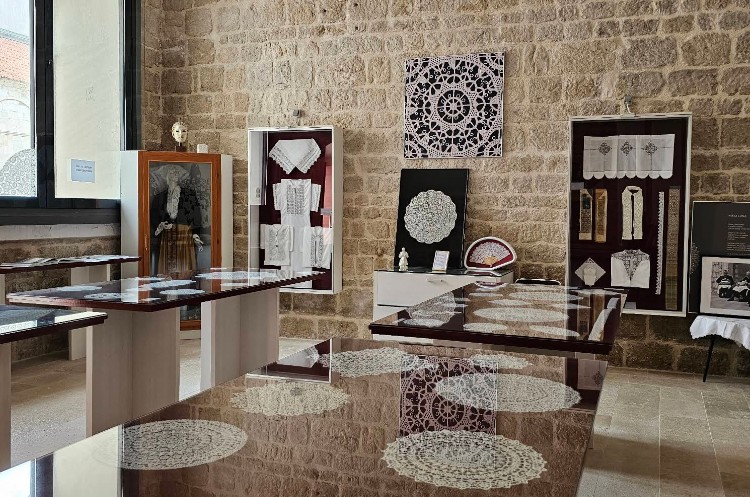
Rector’s Palace reflects Pag’s civic history, while Pag lace preserves one of the island’s most famous cultural traditions.
7. Pag’s Historic Salt Heritage
To understand Pag, you also need to understand salt.
Salt production has played an enormous role in the economic development of the town for centuries. The Pag Tourist Board describes salt, together with Pag lace, as the town’s “white gold”, while the island’s salt pans are among the oldest on the eastern Adriatic coast. Visit Pag
Historic salt warehouses can still be seen opposite the town centre at Prosika. The earliest of these monumental warehouses date to the 17th century. Visit Pag
For travellers interested in industrial heritage, local history and traditional Mediterranean life, the salt story adds another dimension to a visit to Pag.
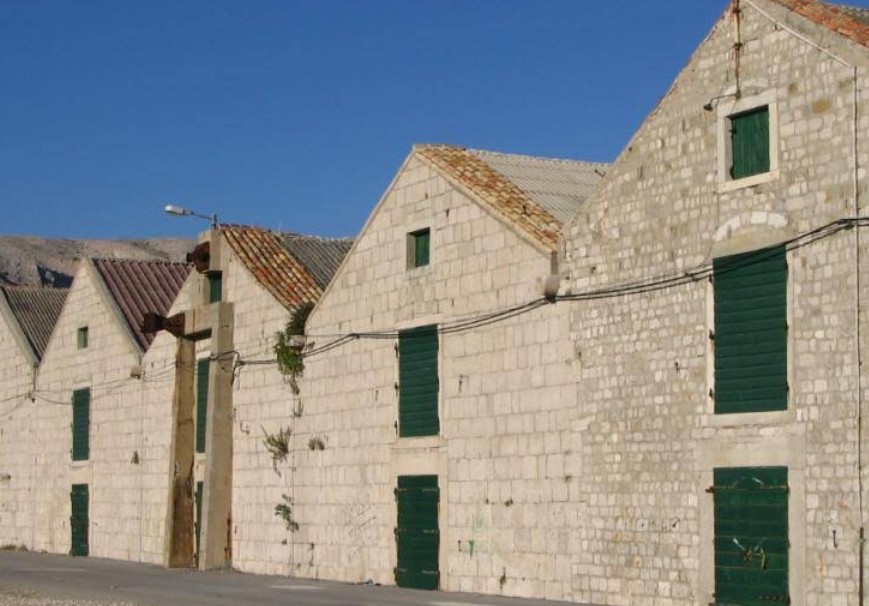
Pag’s historic salt warehouses and salt pans reflect centuries of economic and cultural importance.
8. Sveti Vid – History With One of the Best Views on Pag Island
Cultural exploration does not have to stay within town walls.
Sveti Vid, at 348 metres above sea level, is the highest point on Pag Island. A small church dedicated to St Vitus was built there in the 14th century. Visit Pag
This makes Sveti Vid a perfect combination of hiking, cultural heritage and panoramic scenery.
From the surrounding heights, visitors can appreciate the geography of Pag in a completely different way: rocky ridges, bays, the Adriatic and the mountains of the mainland become part of one extraordinary panorama.
For travellers who enjoy active holidays, it is one of the best ways to connect the island’s historic and natural landscapes.
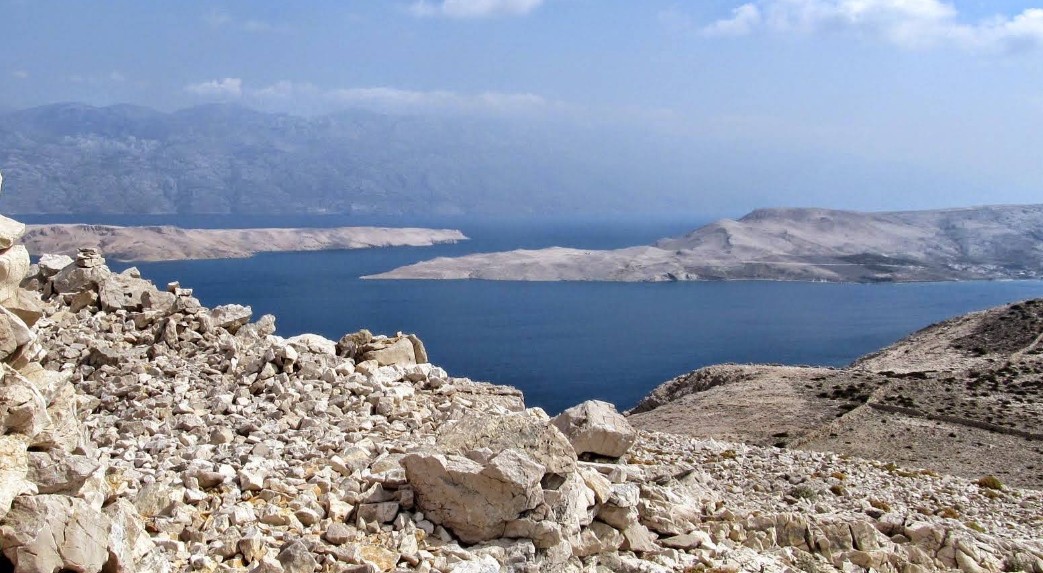
Sveti Vid combines Pag Island’s cultural heritage with some of its most spectacular panoramic views.
Use HeritageMap to Discover More Hidden Places
HeritageMap is particularly useful because it does more than simply display landmarks on a map.
Its interface allows visitors to browse sites by area, type and historical period, examine routes and guides, search near towns and explore information about walking approaches. It is also presented as an ad-free project using open data. Utvrde i dvorci Hrvatske
Open the HeritageMap interactive map
That makes it useful for travellers who enjoy discovering locations outside the standard tourist checklist.
While exploring Pag, open the map and see what lies around you.
Sometimes the most memorable discovery of a holiday is not the attraction you planned months in advance but the ruined church, abandoned fortification or ancient settlement you noticed only because you looked beyond the main road.
The Perfect Historic Pag Island Day Trip – historic sites on Pag Island
A very effective itinerary begins at Fortica near Pag Bridge before continuing towards Old Town Pag.
From there, drive into Pag Town and explore the historic centre on foot, including the Church of the Assumption, Rector’s Palace, Pag Lace Gallery and Kula Skrivanat.
Travellers who still have enough time and energy can finish the day with a hike or viewpoint experience around Sveti Vid.
Where to Stay While Exploring Pag Island

Villa The Secret Diamond is probably one of the best options to rent on the Island of Pag.
One of the advantages of Pag is that you can combine cultural sightseeing with a quiet Mediterranean holiday.
Instead of staying in the busiest tourist areas, consider using the peaceful central part of Pag Island as your base.
Proboj, for example, offers a quieter coastal atmosphere and an excellent location for exploring different parts of the island.
For guests looking for boutique accommodation close to the sea, Boutique Villa Nirvana and Boutique Villa Nirvana 2 provide a peaceful base in Proboj.
For travellers looking for privacy, panoramic views and a swimming pool, Villa The Secret Diamond in Sv. Marko is another option.
You can compare the wider concept and different accommodation styles in our guide to boutique villas on the island.
Historic Pag and the Mediterranean Slow-Travel Experience
Pag is easy to misunderstand if you see it only as a summer beach destination.
Stay a little longer and another island begins to appear.
There are medieval churches behind modern cafés, abandoned settlements beyond busy roads, fortifications overlooking the sea and traditions that have survived for generations.
The island rewards travellers who slow down.
Swim in the Adriatic in the morning. Explore a centuries-old fortress in the afternoon. Walk through Pag’s stone streets before sunset. End your day with local food and a view across the sea.
That combination of history, landscape, culture and Mediterranean living is what makes Pag different.
And HeritageMap provides another excellent tool for finding the places where that history is still visible today.
FAQ: Historic Sites on Pag Island
What are the best historic sites on Pag Island?
Some of the most important sites include Fortica fortress, Old Town Pag, Kula Skrivanat, the historic centre of Pag, the Church of the Assumption, the Rector’s Palace and historic religious sites around Sveti Vid. Grad Pag
Is Old Town Pag worth visiting?
Yes. Old Town Pag lies approximately one kilometre south of today’s town centre and is an important archaeological and religious site containing the Romanesque Church of St Mary and remains associated with the former Franciscan monastery. Visit Pag
What is Fortica on Pag Island?
Fortica is a 17th-century fortress near Pag Bridge. Its strategic location once helped control the maritime passage between Pag Island and the mainland. Grad Pag
What is HeritageMap Croatia?
HeritageMap is an interactive cultural-heritage platform that helps visitors discover historic sites, routes, guides and walking approaches across Croatia. Utvrde i dvorci Hrvatske
Is Pag lace protected by UNESCO?
Yes. Lacemaking traditions from Pag, Lepoglava and Hvar were inscribed on UNESCO’s Representative List of the Intangible Cultural Heritage of Humanity in 2009. Mednarodni register kulturne dediščine
How much time do I need to explore historic Pag?
Half a day is enough for Pag Town and Old Town Pag, but a full day is better if you also want to visit Fortica, explore museums or cultural exhibitions and combine the trip with Sveti Vid or another scenic part of the island.
Plan Your Stay on Pag Island
Exploring Pag’s cultural heritage is even better when you have a peaceful place to return to after a full day on the island.
Discover our boutique accommodation in Proboj and Sv. Marko, close to the sea and ideally positioned for exploring Pag by car.
Boutique Villa Nirvana · Boutique Villa Nirvana 2 · Villa The Secret Diamond
For guests who prefer communicating directly with the property owners, see our direct-booking guide:
Pag Island Direct Booking Guide
Discover Pag beyond the beach. Stay longer. Explore deeper.
HeritageMap
HeritageMap Croatia
Official Pag Tourist Board
Official Pag attractions guide
City of Pag
City of Pag – Fortica and Kula Skrivanat
UNESCO
UNESCO – Lacemaking in Croatia
Book apartment directly:
+38631609241 (Blaž)







[…] Previous […]
[…] For more inspiration, explore our guide to the historic sites of Pag Island. […]
[…] connection with lace-making, salt production and traditional food. If history interests you, our guide to historic sites on Pag Island offers ideas for a cultural day […]
[…] You can also explore our Historic Sites on Pag Island guide. […]
[…] For more cultural ideas, read our guide to historic sites on Pag Island. […]
[…] our Pag Villa guide and historic sites on Pag Island to get to know the destination. You can also discover a local gastronomic tradition in our Pag […]