
Croatia 8th Best Country in 2025 – How a small Adriatic nation rose to 8th in the world rankings
Croatia 8th Best Country in 2025 – Croatia has once again captured global attention — in the 2025 Condé Nast Traveller Readers’ Choice Awards, the country was ranked as the 8th best country in the world, earning a score of 91.56 out of 100. Croatia Week This achievement is more than a tourism accolade; it is a reflection of the country’s evolving identity, the maturity of its travel offerings, and the increasing prestige it commands in international perception.
In this article, we explore in depth what lies behind this ranking: what it means, how Croatia earned it, what the key assets and challenges are, and how it fits into the broader trajectory of global destination branding. Along the way, we present relevant data, comparisons, and narrative insights to illuminate why Croatia is ascending — and what it must do to stay there.

Croatia 8th Best Country in 2025 – AI graphic
We are writing this article because we are also part of the Croatian tourism industry and we are doing our best:
Blaž  +386 31 609 241 | elfabiiani@gmail.com
Jožica +386 41 745 859 | jozica.fabjan@gmail.com
Martin +386 41 745 733 | martinkambic@gmail.com
Boutique Villa Nirvana | Boutique Villa Nirvana 2 | Villa The Secret Diamond
1. Context: The Condé Nast Traveller Readers’ Choice Awards
1.1 Significance and methodology
The Condé Nast Traveller Readers’ Choice Awards are among the most prestigious in the travel world, precisely because they rely on reader voting, rather than editorial selection or third‐party jury judgment. In their 37th edition, more than 750,000 readers worldwide shared their opinions, casting votes across countries, cities, hotels, cruises, islands, and other travel categories. Croatia Week
This method has two important implications:
-
The ranking reflects popular experience and sentiment, not just marketing or reputation.
-
It tends to favor destinations that deliver consistently across multiple dimensions (scenery, culture, hospitality, value), rather than those strong in only one domain.
Croatia’s emergence in the top 10 thus signals broad-based appreciation, not just niche interest.
1.2 The 2025 top ten
In 2025, the ranking of top countries was:
-
Japan – 95.36
-
Greece – 92.31
-
Portugal – 92.08
-
Italy – 92.02
-
Spain – 91.96
-
Türkiye – 91.91
-
Ireland – 91.59
-
Croatia – 91.56
-
France – 91.24
-
Canada – 90.94 Croatia Week
That places Croatia above France, Canada, and many long-established tourism leaders. Its proximity in score to those ahead further underscores that it is competing at the highest tier.
1.3 Other categories where Croatia fared strongly – Croatia 8th Best Country in 2025
Beyond the overall country ranking, Croatia earned notable placement in more specific categories. For example, Hvar was recognized among the Best Islands in Europe. Croatia Week This reinforces that Croatia’s strength is not monolithic — it is delivering both on destination‐level appeal and hotspot appeal.
2. Why Croatia ranked 8th: Core strengths – Croatia 8th Best Country in 2025
What factors underpin Croatia’s ascent? The following dimensions are central to understanding its success.
2.1 Natural beauty and diversity – Croatia 8th Best Country in 2025
Croatia’s landscapes are nothing short of spectacular. From the terraced waterfalls of Plitvice Lakes to the karst ruggedness of its Dalmatian islands, the country offers a vast palette of natural environments.
-
National parks: Croatia has eight national parks, each showcasing distinct ecosystems — from forests and waterfalls to islands and mountain gorges.
-
Adriatic coast & islands: The coastline is punctuated by dramatic cliffs, secluded coves, and over a thousand islands.
-
Mountain and inland interiors: Beyond the coast, the Dinaric Alps, rivers, and forests provide contrast and alternative experiences (hiking, wildlife, rural tourism).
This diversity allows Croatia to appeal to many types of travelers — nature seekers, beachgoers, hikers, photographers, or those seeking tranquility.
2.2 Cultural heritage and history
Croatia’s long, layered history — from Illyrians to Romans, Venetians, Habsburgs, Ottomans, and Yugoslavia — has left a rich architectural and cultural tapestry. Some highlights:
-
Historic towns and walled cities: Dubrovnik, Split (with Diocletian’s Palace), Trogir, Šibenik, and many others.
-
UNESCO sites: Multiple sites, including historic city cores, Roman ruins, and cultural landscapes.
-
Intangible heritage: Traditional crafts, music, cuisine, folklore, local festivals.
This deep cultural dimension complements the scenic appeal.
2.3 Tourism infrastructure and innovation
Croatia has matured as a tourism destination. Over the past decade:
-
A proliferation of boutique hotels, heritage conversions, and upscale lodging has raised standards.
-
Transport connectivity (airports, ferries, roads) has improved, making more corners accessible.
-
Digital marketing, visitor services, and branding initiatives (e.g. regional campaigns) have become more sophisticated.
Thus the “on-the-ground” visitor experience is meeting expectations more reliably than in earlier eras.
2.4 Value perception and word-of-mouth
Because the ranking is based on readers’ actual experiences, word-of-mouth and value perception matter greatly. Many travelers feel Croatia delivers high visual and experiential payoff relative to cost, especially compared to some more expensive Western European destinations.
In effect, Croatia is perceived as a “hidden gem” that is now entering mainstream awareness — but still offering a freshness and sense of discovery.
2.5 Strategic branding and momentum – Croatia 8th Best Country in 2025
Croatia’s gains in reputation don’t happen in isolation. Over the past 10–15 years:
-
The Croatian Tourist Board has mounted increasingly targeted, high-quality campaigns.
-
Influencers, travel media, and experiential travel have spotlighted Croatia’s offbeat, less-crowded destinations.
-
Regional competition with neighbors (Slovenia, Montenegro, Italy) has stimulated further upgrades.
Thus the 2025 ranking is a peak in a rising trajectory, not a sudden fluke.
3. Challenges and caveats: What Croatia must manage – Croatia 8th Best Country in 2025
No recognition is without risk. As Croatia basks in this success, it must face several ongoing and emerging challenges to sustain and deepen its standing.
3.1 Overtourism and capacity stress
Some of Croatia’s most famous destinations are under intense tourist pressure — particularly Dubrovnik, Plitvice, Split, and island hubs. Issues include:
-
Congestion and crowding: Narrow streets, limited ferry slots, and infrastructure strain.
-
Environmental stress: Erosion, waste management, water & energy supply in peak season.
-
Resident discontent: Tensions between locals and tourism operations (housing, noise, displacement).
If not managed, overcrowding can degrade the visitor experience and tarnish the “authenticity” brand.
3.2 Seasonality and overreliance on summer
Much of Croatia’s tourism yields are concentrated in the summer months (June–August). This creates:
-
Underutilized capacity in off-season months (low occupancy, reduced income).
-
Labor challenges: seasonal hiring, inconsistency.
-
Vulnerability to climate and demand shifts: heatwaves, storms, or shifts in tourist preferences may have outsized impact.
Diversifying into shoulder-season and off-season attractions is crucial.
3.3 Infrastructure bottlenecks in remote areas
While main corridors and coastal zones are well serviced, many interior, lesser-known, or island destinations lag in:
-
Roads and transport connectivity.
-
Reliable public services (power, water, broadband, waste).
-
Visitor amenities (lodging, food, interpretive services).
These gaps limit their potential to absorb overflow and to offer dispersal beyond hotspots.
3.4 Environmental sustainability and climate change
Croatia must navigate:
-
Rising sea levels, coastal erosion, changing weather patterns.
-
Preserving delicate ecosystems (karst, marine, forest) under increasing pressure.
-
Ensuring sustainable resource use, waste treatment, and carbon emissions control.
Sustainable practices are no longer optional—they are essential for future viability.
3.5 Competitive pressures from other destinations
Croatia now competes head-on with nations like Greece, Portugal, Italy, Spain, Türkiye, and others in the Mediterranean and Europe. These destinations may:
-
Offer lower costs, more scale, or new infrastructure.
-
Invest heavily in novel attractions or marketing.
-
Crowdsource alternative routes for tourists seeking less familiar locales.
Croatia must maintain differentiation and continuous improvement to remain competitive.
4. Comparative analysis: Croatia vs. its peers
To gauge how well Croatia is doing, it is useful to examine how it compares to key peers along critical axes.
4.1 Scenic beauty and nature
-
Croatia: strong, due to diversity (coast, islands, national parks, mountains).
-
Greece / Italy / Spain: larger land area allows more diversity, often more dramatic variation (e.g. Alpine to Mediterranean).
-
Portugal / Türkiye: offer mix of coastline + interior but perhaps less island complexity.
-
Ireland: lush, green, but less dramatic coastal archipelagos.
Croatia’s strength is high-perceived value in scenic richness per unit area.
4.2 Cultural / historical depth
-
Italy and Greece still hold global leadership in classical heritage.
-
Spain, Turkey, and Portugal bring imperial, Ottoman, colonial layers.
-
Croatia’s heritage is somewhat “in-between”: less globally iconic but regionally deeply resonant. Its advantage is often freshness and fewer overwhelming crowds.
4.3 Infrastructure and accessibility
-
Countries like Italy, Spain, and Greece have long-established mass tourism infrastructure, with widespread regional airports, high-speed train networks, etc.
-
Croatia is catching up, especially in coastal connectivity, but has more gaps in rural and island linkage.
4.4 Price / value
-
Croatia generally competes as more affordable than many Western European options (especially in non-peak months), while delivering high appeal.
-
This gives it an edge among value-seeking travelers who want visual impact without premium pricing.
4.5 Sustainability and future resilience
-
Countries like Portugal or some Scandinavian nations place strong emphasis on sustainability, carbon reduction, and green tourism.
-
Croatia is making strides but must proactively match or exceed peer efforts — especially since environmental fragility is higher.
Overall, Croatia currently offers a compelling mix: strong beauty, solid culture, improving infrastructure, good value, and momentum. But to ascend further (into top five or top three), it must narrow gaps with its peers.
5. Regional highlights: What places are driving the acclaim – Croatia 8th Best Country in 2025
Part of Croatia’s ranking success is that it is not monolithic — individual destinations carry disproportionate weight. Here are some that stand out:
5.1 Hvar – Croatia 8th Best Country in 2025
The island of Hvar was singled out among Best Islands in Europe. Croatia Week Its combination of seaside glamour, historic architecture, vineyards, and nightlife makes it a magnet for both luxury-seeking and experiential travelers. It’s a flagship “halo” destination for Croatia.
5.2 Plitvice Lakes and Krka National Parks – Croatia 8th Best Country in 2025
These are among Croatia’s most iconic natural attractions. The cascading waterfalls, terraced lakes, and lush green surroundings make them emblematic of “Croatia’s nature” in global imagery. Their accessibility and managed visitor experience are keys to sustaining reputation.
5.3 Dubrovnik and Split – Croatia 8th Best Country in 2025
Dubrovnik’s walled city, perched on the Adriatic, remains one of the most photographed and visited heritage sites in the world. Split’s Diocletian’s Palace offers a living, city‐within-a-palace environment. Together, they anchor Croatia’s cultural tourism backbone.
5.4 Lesser known gems and dispersal regions
To mitigate overtourism, Croatia is also promoting lesser-known destinations (continental inland, smaller islands, rural villages). These will be critical for spreading demand, lengthening stays, and offering alternative experiences off the beaten path.
6. Strategic recommendations: Maintaining and elevating Croatia’s ranking
To preserve and improve its position among the world’s top destinations, Croatia should consider the following strategic directions:
6.1 Strengthen sustainable tourism policies
-
Carrying-capacity planning: set limits on visitor numbers in fragile zones, manage crowd flow.
-
Green certifications: for hotels, transport, restaurants.
-
Renewables, water reuse, waste recycling: especially in islands and national parks.
-
Carbon footprint tracking and mitigation: including incentives for low-carbon tourism modes.
Sustainability should not be an afterthought but a core part of tourism strategy.
6.2 Develop off-season and diversified attractions
-
Promote culture, festivals, wellness, culinary tourism in shoulder months.
-
Expand winter tourism in interior/continental areas (skiing, hiking, wellness spa).
-
Market slow travel routes through less-known regions (inland villages, culinary trails, wine regions, forest trails).
This helps reduce seasonality pressures and increases resilience.
6.3 Improve connectivity and infrastructure beyond the coasts
-
Enhance ferry, catamaran, and small-boat services to outlying islands.
-
Upgrade rural roads and public transport to connect interior and less-developed zones.
-
Ensure broadband and digital services in remote areas, enabling remote work tourism.
6.4 Leverage intelligent marketing and storytelling
-
Focus messaging on authentic experiences, hidden gems, seasonal richness, and balanced tourism.
-
Use storytelling to highlight local culture, traditional crafts, and micro-destinations.
-
Harness influencers and media in targeted markets to drive interest in off-path locales.
6.5 Data, feedback loops, and benchmarking
-
Invest in data systems to measure visitor satisfaction, flow, peak load, environmental impact.
-
Benchmark annually versus peer destinations to identify gaps and opportunities.
-
Engage with tourism research, traveler surveys, and on-site visitor feedback continuously.
6.6 Cultivate community engagement and local buy-in
-
Involve local residents in destination planning to reduce “tourism resentment.”
-
Incentivize local entrepreneurship (guesthouses, guiding, creative ventures).
-
Ensure that benefits (income, infrastructure, cultural revival) accrue equitably across regions.
7. Projecting forward: Can Croatia break into the top 5 (or top 3)?
Given its upward momentum and relatively narrow gap to those ahead, Croatia has realistic potential to move further up in future Readers’ Choice rankings. However, doing so would require:
-
Closing the operational and experience gaps relative to countries ahead (Italy, Greece, Portugal, Spain).
-
Sustained investment in sustainability and brand differentiation, so that rising popularity does not erode quality.
-
Stronger push into new markets (Asia, Latin America, long-haul) to increase brand exposure beyond Europe.
-
Greater depth in lesser-known regions, enabling the country to absorb visitor growth without saturating core hotspots.
If successfully managed, it is not inconceivable that Croatia could join the top 5 in the next 5–10 years, or even challenge for top 3 status in favorable cycles.
8. A deeper narrative: What this ranking says about Croatia’s evolution
Beyond the numbers, this ranking carries symbolic and strategic meaning.
8.1 From “emerging destination” to mature contender
A decade ago, Croatia might have been seen as a “rising star.” Today, it is being judged alongside long-time heavyweights. That shift reflects institutional maturity, better infrastructure, more consistent delivery of visitor experience, and improved branding.
8.2 The power of cumulative identity
Croatia’s strength is the cumulative weight of many assets — nature, culture, islands, heritage, coastal life — rather than reliance on one standout feature. This gives resilience: if one attraction suffers (e.g. due to climate change), others still carry appeal.
8.3 Destination identity in a post-COVID era
In a world reshaped by pandemic travel shifts, travelers increasingly prioritize authenticity, safety, nature, and less crowded environments. Croatia is well positioned for this paradigm, combining nature and heritage without oversized megadestinations (at least for now).
8.4 A model for “small but mighty” nations
Croatia’s success shows how a relatively small country (by land or population) can punch above its weight through strategic focus, layered appeal, and disciplined management. That’s a case study for many emerging or “mid-tier” destinations around the world.
8th best country in the world
Standing on a wooden walkway at dawn, the mist weaving through cascading waterfalls, you sense something sublime. These are the Plitvice Lakes — a place that feels suspended between heaven and Earth. It is here, among forests, islands, rivers, and centuries-old walls, that Croatia makes its quiet, powerful case.
In 2025, Croatia was named the 8th best country in the world by Condé Nast Traveller’s global readers, with a score of 91.56. It rose above many traditional powerhouses in tourism — and did so through lived experience, not just marketing. This achievement marks more than a moment: it signals the arrival of a country ready to compete on the global stage.
This article explores how Croatia got here, what drives its appeal, where the risks lie, and how it can go further. It is an exploration of ambition, humility, nature, culture, and strategic direction.
The ranking: a milestone, not an endpoint
The Readers’ Choice Awards rely on real traveler sentiment. Over 750,000 readers responded in 2025, casting their impressions across places they had visited. Croatia Week Croatia’s 91.56 score placed it just behind Ireland (91.59) and ahead of France (91.24). That it lands among nations like Japan, Greece, Portugal, Italy, Spain, and Türkiye is a testament to the strength and depth of its offering.
To put it in perspective: many of those countries have two or three times Croatia’s land area, far more established tourism infrastructure, or centuries of dominant cultural mythology. Yet Croatia now competes with them on standpoint.
Moreover, Croatia also earned accolades in niche categories — notably Hvar’s inclusion among Europe’s best islands. That combination of broad and niche recognition is powerful: it says that travelers feel not only that “Croatia is great,” but also “Croatia has special places worth knowing.”
This is not a finish line but a checkpoint. To sustain, and to rise further, Croatia must now manage success with care.
What lies behind the ranking: strength factors – Croatia 8th Best Country in 2025
Diversity of terrain and ecosystems
One of Croatia’s greatest advantages is the sheer variety packed into a relatively small territory.
-
Coast & islands: A largely jagged coastline stretches hundreds of kilometers, interspersed with islands of all sizes. The sea meets limestone cliffs, pebble beaches, hidden coves.
-
Inland wilderness: Move inland and you meet karst plateaus, river valleys, deep forests, glacial lakes, river canyons.
-
Mountain ranges: The Dinaric Alps rise in the interior, offering alpine scenery, cooler retreats, and alternative tourism opportunities (hiking, winter sports).
-
Microclimates: Because of the interplay of sea, mountains, forests, and interior plains, Croatia offers multiple climate zones, each with distinct flora, fauna, and weather patterns.
This environmental richness allows Croatia to offer more than just “beach plus heritage.” It can host transformations of experience — coastal luxury, mountain retreats, forest solitude, island bliss, rural renewal.
Cultural and historical layering
Croatia is a crossroads: Illyrians, Romans, Byzantines, Venetians, Austro-Hungarian rule, Slavic migrations, Ottoman incursions, and modern Yugoslav history have left stratified layers across towns and landscapes.
-
In Dubrovnik, walking the city walls is to walk centuries of identity, defensive conquest, renaissance, and global fantasy (used in Game of Thrones).
-
In Split, Diocletian’s Palace is not a “palace museum” but a thriving city core, embedded in everyday life.
-
In Trogir, Šibenik, Zadar, and many Istrian towns, you find medieval alleys, Roman mosaics, Venetian palaces, and Baroque facades.
-
Folk traditions, regional dialects, crafts, and culinary typologies (coast vs. interior) contribute texture.
This cultural depth gives Croatia legitimacy beyond natural beauty, anchoring it in narrative and identity. Visitors don’t just see; they feel continuity, place, and time.
Upgraded infrastructure and visitor experience
Croatia’s tourism infrastructure has evolved significantly:
-
Accommodation diversity: From boutique heritage hotels to design stays and luxury resorts, visitors now find high-end options beyond traditional beachfront chains.
-
Connectivity: Improvement in airports (Split, Dubrovnik, Zagreb), ferry and catamaran networks, regional roads, and public transport have lowered friction of travel.
-
Services and amenities: Enhanced signage, visitor centers, guided tours, multilingual interpretation, and digital presence help deliver consistent experiences.
-
Marketing sophistication: Campaigns that highlight less-known destinations, seasonal offerings, and narrative-driven storytelling have broadened appeal beyond the classic “sun + sea”.
These improvements reduce disappointment, increase conversion (visitors recommending to friends), and strengthen brand reputation.
Value perception and experiential ratio
A striking characteristic of Croatia’s appeal is how much travelers feel they get relative to what they pay. Compared to many Western European rivals, Croatia often offers:
-
Dramatic visual beauty and heritage value
-
High‐quality lodging, food, and services
-
Lower or comparable costs in lodging, transport, food
-
Strong differentiation (less commoditized experience)
That “surprise value” tends to generate strong word-of-mouth and repeat visits — the kind of loyalty that feeds ranking systems dependent on real votes.
Momentum and narrative attractiveness
Finally, Croatia benefits from narrative momentum. As travel media highlight hidden coves, offbeat regions, and experiential travel, Croatia’s brand is propelled by curiosity and discovery. It is not yet overexposed in many markets, so travelers still feel they are uncovering something rather than following the herd.
In sum, the ranking is less a miracle and more the result of sustained alignment of assets, ambition, and execution.
The spots that power prestige – Croatia 8th Best Country in 2025
Certain destinations within Croatia carry disproportionate influence in global perception. Let’s explore them.
Hvar — The superstar island
Hvar sits at the intersection of glitzy Mediterranean island life and regional authenticity. It is known for:
-
Sun-drenched coastlines, lavender fields, and vineyards
-
Historic architecture, fortresses, and harbor promenades
-
Vibrant nightlife (but also slower, luxury retreats)
-
Accessibility (via boat or catamaran from Split)
-
Good lodging options spanning boutique and luxe
Its inclusion among Europe’s best islands underscores its role as a “halo brand” for Croatia — a glamorous gateway that draws attention, often funneling visitors deeper into the country.
Plitvice Lakes & Krka National Parks — icons of nature
These parks are among Croatia’s most photographed and visited natural sites.
-
Plitvice: A series of 16 lakes linked by waterfalls and cascades, set within a dense forested valley. The boardwalks and trails allow immersive, closeness-to-water experience.
-
Krka: Featuring the Skradinski Buk falls and river pathways, it offers both lush scenery and the possibility of swimming (in designated areas).
These parks are not only natural jewels but also manageable in terms of visitor flow — when well regulated, they offer “wow” moments that anchor travelers’ memories.
Dubrovnik and Split — cultural anchors
-
Dubrovnik: The walled city, with its ramparts, red-tiled roofs, and Adriatic backdrop, is among the most visually iconic cities in Europe.
-
Split: The living city within Diocletian’s Palace is a masterful integration of ancient and modern urban life.
These cities serve as cultural anchors — destinations rather than transit points — giving depth, narrative, and emotional weight to the travel experience.
Emerging and offbeat destinations – Croatia 8th Best Country in 2025
To scale responsibly, Croatia is increasingly highlighting:
-
Interior regions (Lika, Gorski Kotar) with forests, rivers, rural life
-
Lesser islands off the beaten path
-
Culinary and wine trails (Istrian peninsula)
-
Cultural heritage towns off the main tourist route
These spots help diversify demand and give travelers more intimate, local, and sustainable alternatives.
Risks on the path ahead – Croatia 8th Best Country in 2025
No success is risk-free. As Croatia reaches new heights, it must navigate several threats carefully.
Overtourism and breaking experience
If unmanaged, areas like Dubrovnik, Split, and Plitvice may deteriorate into congested zones where visitors feel rushed, frustrated, or underwhelmed. The loss of space, quiet, and authenticity can erode the very qualities that made them prized.
In extreme cases, travel reviews may shift from “beautiful but crowded” to “not worth it”— hurting recommendation and ranking performance.
Seasonality and financial fragility
Croatia’s heavy reliance on summer traffic creates cycles of feast and famine:
-
Off-peak months often see underutilization of capacity.
-
Infrastructure and staffing must scale flexibly.
-
Any perturbation (weather, global demand shock, health crisis) has magnified impact.
Building resilience through year-round tourism is essential.
Infrastructure gaps in peripheral zones
Many interior, rural, or island areas still lack robust access, services, or visitor amenities. Their potential is constrained by:
-
Poor transport connections (roads, ferries)
-
Limited lodging or food options
-
Lower digital connectivity
Unless investment keeps pace, the opportunity to absorb visitor flows into quieter regions may stagnate.
Environmental stress and climate change – Croatia 8th Best Country in 2025
Given Croatia’s coastal exposure and sensitivity of karst and marine ecosystems, it faces:
-
Rising seas, coastal erosion, saltwater intrusion
-
Changing precipitation, drought stress, forest fires
-
Pressure on water supply and waste treatment in densely visited zones
-
Need for carbon emission control in transport, hospitality, and supply chains
Failure to address environmental risks could threaten long-term viability.
Competitive pressures – Croatia 8th Best Country in 2025
As Croatia becomes more well-known, it loses some of its “undiscovered allure.” Competing destinations may offer:
-
Lower cost alternatives
-
Novel attractions (immersive themed experiences, niche wellness, adventure tourism)
-
More aggressive marketing and infrastructure deployment
Croatia must keep raising the bar to stay distinctive.
Strategy: How Croatia can rise further – Croatia 8th Best Country in 2025
Given its strengths and the risks, here are strategic imperatives Croatia should pursue:
Integrate sustainability as core, not peripheral
-
Adopt carrying capacity limits in sensitive zones.
-
Create and enforce green certifications for tourism businesses.
-
Invest in renewables, water recycling, zero-waste strategies, especially for islands.
-
Monitor carbon performance and offer incentives/offsets.
Sustainable excellence should become a brand differentiator, not just a compliance burden.
Extend and enrich the season
-
Promote cultural, wellness, festival, and gastronomic tourism in shoulder and winter months.
-
Develop indoor attractions, spa circuits, and wellness retreats in the colder season.
-
Package slow travel itineraries (cycling, hiking, caravan, rail) suitable for spring/fall.
This reduces peak pressure and stabilizes revenue flows.
Deepen connectivity beyond the coast
-
Enhance ferry / catamaran services with frequency and reliability to remote islands.
-
Upgrade rural road networks and public transit to bring interior regions into itineraries.
-
Expand broadband and digital infrastructure to support remote work tourism and connectivity.
Greater accessibility will unlock latent potential.
Narrative, storytelling, and experiential marketing – Croatia 8th Best Country in 2025
-
Highlight unique stories (local artisans, eco-villages, micro-regions).
-
Promote off-path experiences (caving, agro-tourism, artisan workshops).
-
Leverage media, influencers, and immersive content (video, VR, social) to showcase depth.
-
Tailor messaging per market (Asia, Americas, emerging visitor sources) to build global awareness beyond Europe.
Data-driven visitor management and feedback loops – Croatia 8th Best Country in 2025
-
Deploy visitor flow, satisfaction, and environmental impact tracking systems.
-
Use real-time data to monitor congestion, redistribute traffic, manage itineraries.
-
Gather continuous feedback from travelers to detect pain points early.
-
Benchmark annually vs. top competitors to spot gaps.
Such intelligence enables adaptive planning rather than reactive scrambling.
Engage communities and equitable growth – Croatia 8th Best Country in 2025
-
Involve local voices in destination planning (town halls, participatory workshops).
-
Support local entrepreneurship (homestays, guiding, food, craft).
-
Ensure tourism’s benefits (jobs, infrastructure investments) flow to all regions, not just core hotspots.
-
Foster pride and ownership in preserving identity and environment.
Community buy-in is essential for sustaining the quality and spirit tourists hope to experience.
Projection: Can Croatia reach top 5 or top 3? Croatia 8th Best Country in 2025
The gap between Croatia and top-5 countries is measurable — often in marginal increase in perception, infrastructure, or novelty of offering. But the gap is not insurmountable.
To break into the top 5:
-
Croatia must elevate its weakest dimensions (infrastructure in poorer zones, off-season offerings, sustainability credentials).
-
It must intensify storytelling and brand resonance across new, distant markets.
-
It must show that increasing popularity doesn’t degrade experience (i.e. sustained quality).
-
It must rapidly scale the development of off-path destinations to absorb growth without overtaxing core sites.
If these align, a top-5 positioning may be plausible within 5–10 years. Top-3 is more ambitious but not impossible — particularly if Croatia captures a moment where travel preferences shift heavily toward nature, authenticity, sustainability — domains where Croatia is already strong.
Conclusion – Croatia 8th Best Country in 2025
Croatia’s ranking as the 8th best country in the world is a milestone achievement — one earned by experience, not hype. It reflects the convergence of natural majesty, cultural depth, growing infrastructure, and smart branding momentum.
But success also leads to responsibility. To preserve its appeal and to climb higher, Croatia must master the art of sustainable scale: growing without breaking, diversifying without diluting, innovating without losing identity.
For travelers, this moment is an invitation: to visit not just the iconic, but to explore the margins; not just in summer, but year-round; not just passively, but immersively.
For the nation and its managers, it is an inflection point: a chance to shape tourism in balanced, ethical, lasting ways — so that Croatia is not only celebrated in rankings, but treasured in memories.

Croatia 8th Best Country in 2025 – Readers choice award
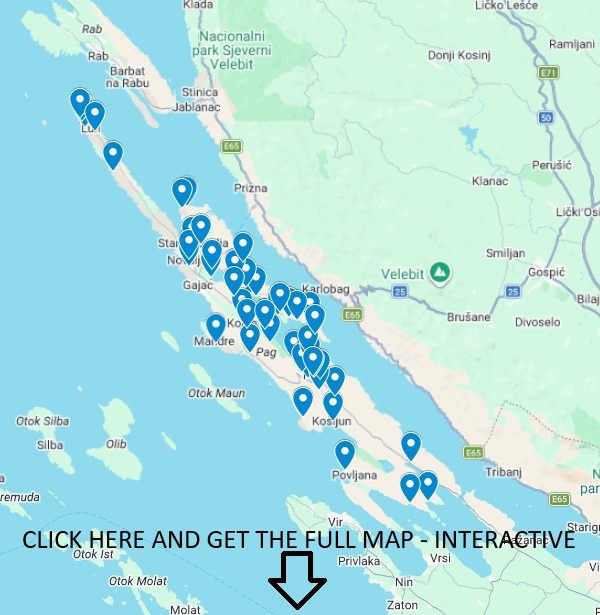
Would you like to book an apartment or villa on the island of Pag?
Blaž +386 31 609 241 | elfabiiani@gmail.com
Jožica +386 41 745 859 | jozica.fabjan@gmail.com
Martin +386 41 745 733 | martinkambic@gmail.com
Boutique Villa Nirvana | Boutique Villa Nirvana 2 | Villa The Secret Diamond

Leave A Comment