


Pag (city) – The island of Pag, located in northern Dalmatia, is one of the most fascinating destinations in Croatia. Known for its dramatic landscapes, crystal-clear Adriatic waters, centuries-old traditions, and vibrant nightlife, Pag is truly an island that offers something for everyone. From tranquil beaches and charming stone villages to world-famous festivals and luxurious villas, it’s a place where contrasts blend into a unique holiday experience.
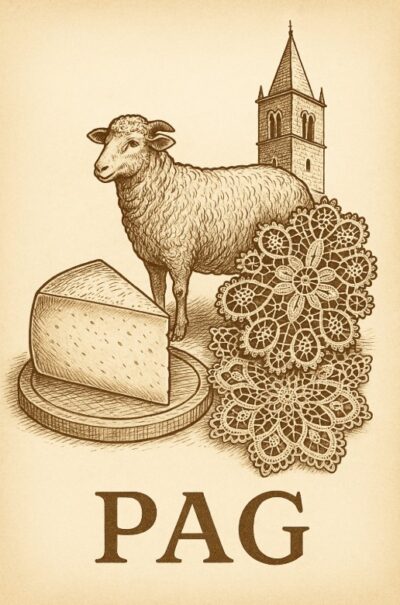
Pag – illustration by B. Fabjan
If you are planning a holiday in Croatia, Pag (city) should be at the top of your list. Whether you are searching for relaxation, adventure, cultural exploration, or luxury accommodation, Pag delivers all of it in abundance.
In this guide, we’ll take you through everything you need to know about Pag: its history, culture, food, nightlife, beaches, activities, and the best places to stay, including Boutique Villa Nirvana and Boutique Villa Nirvana 2 in Proboj, as well as the stunning Villa The Secret Diamond in Sv. Marko.

Pag – apartments near Pag
Contact & Reservation
Blaž ☎️ +386 31 609 241 | elfabiiani@gmail.com
Jožica ☎️ +386 41 745 859 | jozica.fabjan@gmail.com
Martin ☎️ +386 41 745 733 | martinkambic@gmail.com
Boutique Villa Nirvana | Boutique Villa Nirvana 2 | Villa The Secret Diamond
More information about Pag: Tourist Board of the Town of Pag
A Landscape Unlike Any Other – Pag (City)
Pag is often referred to as the “moon island” because of its rocky, barren landscape that looks like the surface of the moon. The unique karst terrain, shaped by centuries of strong bora winds, contrasts beautifully with the turquoise Adriatic Sea. While the northern part of the island is mostly rugged and dry, the southern areas open into fertile fields, olive groves, and vineyards.
This distinctive geography creates a surreal atmosphere that sets Pag apart from other Croatian islands. When you drive across the island, you’ll witness breathtaking panoramas where stone, sea, and sky merge into a minimalistic masterpiece of nature.
The Town of Pag: Tradition and History – Pag (City)
The town of Pag is the cultural and administrative heart of the island. With its narrow stone streets, medieval walls, and historic squares, Pag Town feels like a living museum. Founded in the 15th century by the famous architect Juraj Dalmatinac, the town is known for its orderly Renaissance grid design.
One of Pag’s biggest cultural treasures is Pag lace (paška čipka), a UNESCO-recognized craft practiced for centuries. Handmade by skilled women using delicate threads and needles, Pag lace is considered one of the finest examples of lacework in Europe.
The town is also home to the Benedictine Monastery of St. Margaret, which preserves ancient manuscripts and recipes for traditional sweets such as baškotin (a type of hard biscuit). A stroll through Pag Town offers visitors a glimpse into both its rich cultural heritage and its vibrant present.
Beaches of Pag
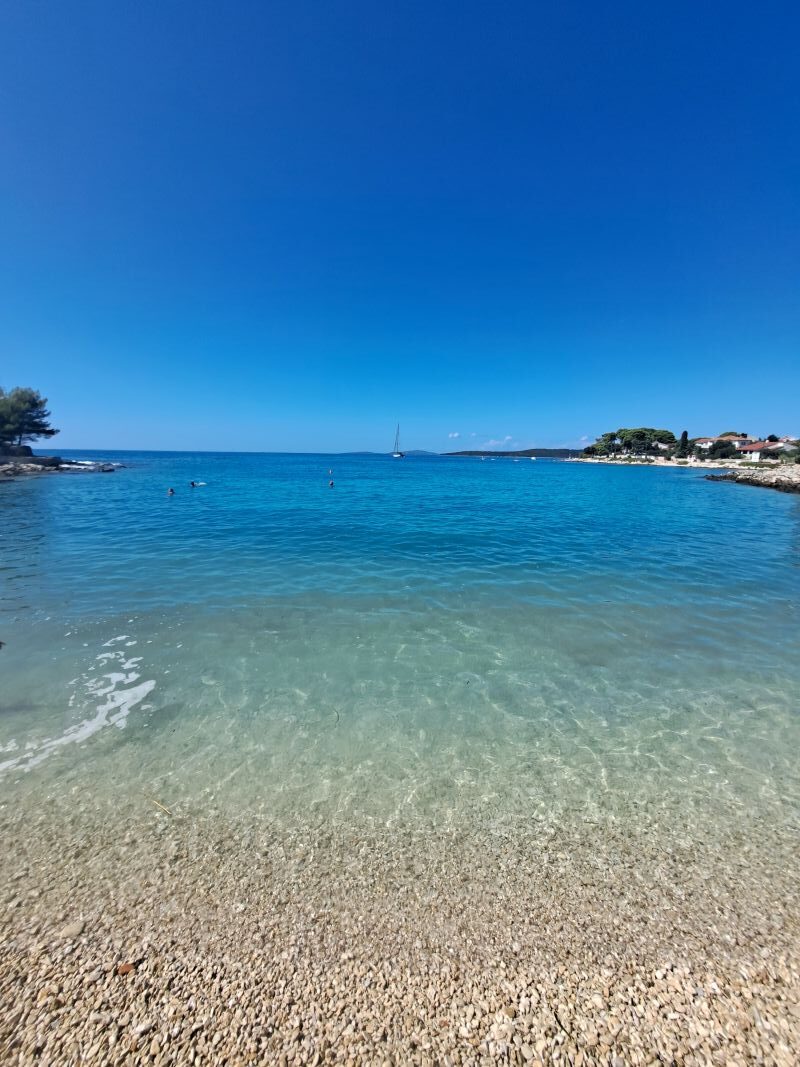
Pag has some of the most diverse and beautiful beaches in Croatia. Whether you are looking for quiet coves, family-friendly shores, or party hotspots, the island has it all.
-
Zrće Beach – The world-famous party beach near Novalja, home to iconic clubs such as Papaya, Aquarius, and Noa. International DJs play here every summer, attracting thousands of festivalgoers.
-
Ručica Beach – A stunning bay near Metajna, surrounded by rocky cliffs that create a surreal desert-like setting.
-
Prosika Beach – Located in Pag Town, ideal for families with children thanks to its shallow waters.
-
Caska Beach – Situated near Zrće, this beach not only offers crystal waters but also holds remnants of an ancient Roman settlement beneath the sea.
-
Sv. Duh Beach – A long sandy beach near Kolan, perfect for swimming and water sports.
-
Šimuni Beach – Famous for its camping site and water activities, offering a relaxed yet active environment.
Nightlife on Pag
Pag has become synonymous with nightlife and festivals. The island is often called the “Croatian Ibiza” thanks to its legendary Zrće Beach parties. Every summer, music festivals such as Hideout, Sonus, and Fresh Island attract international crowds who come for non-stop entertainment.
But nightlife on Pag is not just about festivals. Novalja, the island’s second-largest town, offers bars, restaurants, and lounges with a more relaxed vibe. Pag Town, while quieter, also has charming taverns and seaside cafes where you can enjoy an evening drink under the stars.
Gastronomy: The Flavors of Pag
Pag’s cuisine is one of its strongest attractions. The island is famous for its Pag cheese (paški sir), one of the most recognized cheeses in Croatia. Made from sheep’s milk, it has a strong, salty flavor influenced by the island’s herbs and sea salt carried by the bora wind.
Other local specialties include:
-
Lamb from Pag – Tender and flavorful thanks to the sheep grazing on aromatic island herbs.
-
Pag salt – Produced in salt pans that have been active since Roman times.
-
Olive oil from Lun – Derived from some of the oldest olive trees in the Mediterranean.
-
Pag wine – Local vineyards produce excellent white and red wines, perfect to accompany traditional dishes.
Dining on Pag is a true gourmet adventure, from rustic konobas serving homemade meals to modern fine dining restaurants.
Activities and Adventures
Pag is not just about beaches and nightlife—it also offers plenty of outdoor activities for adventurers.
-
Cycling and Hiking – The island has over 120 km of cycling paths and scenic hiking trails.
-
Water Sports – Windsurfing, paddleboarding, jet skiing, and diving are all available.
-
Boat Trips – Explore hidden coves, nearby islands, and sea caves with organized boat tours.
-
Cultural Events – Don’t miss the Pag Carnival and summer festivals showcasing local traditions.
Luxury Accommodation on Pag – Pag (City)
While Pag offers accommodations for all budgets, luxury travelers will be delighted to discover high-end villas that provide privacy, comfort, and breathtaking views.
Boutique Villa Nirvana (Proboj, Pag)
Set in the peaceful village of Proboj, Boutique Villa Nirvana is a true seaside sanctuary. With panoramic sea views and stylish modern interiors, it offers the perfect blend of comfort and elegance. Guests can enjoy spacious bedrooms, sun terraces, and direct access to the sea, making it one of the most desirable stays near Novalja.
Boutique Villa Nirvana 2 (Proboj, Pag)
Just a short distance away, Boutique Villa Nirvana 2 offers another premium option for travelers seeking luxury. With its contemporary design and state-of-the-art amenities, this villa is ideal for families, groups, or couples who want both privacy and proximity to Pag’s attractions.
Villa The Secret Diamond (Sv. Marko, Pag)
For those looking for exclusivity, Villa The Secret Diamond in Sv. Marko is an architectural gem. Nestled in a tranquil setting with stunning views, the villa combines modern luxury with natural beauty. Its private pool, designer interiors, and close access to the sea make it a perfect retreat for discerning travelers.
These villas redefine luxury living on Pag, ensuring that your holiday is not just memorable but truly exceptional.
Best Time to Visit Pag – Pag (City)
The island enjoys a Mediterranean climate, with hot summers and mild winters. The best time to visit depends on your preferences:
-
June to August – Peak season with festivals, nightlife, and lively beaches.
-
May and September – Ideal for a quieter holiday with warm weather and fewer crowds.
-
Spring and Autumn – Perfect for hiking, cycling, and cultural exploration.
Why Pag is Unique
What makes Pag truly special is its diversity. It is an island where you can:
-
Party all night at world-famous festivals.
-
Relax in luxurious villas with sea views.
-
Discover ancient crafts and cultural heritage.
-
Taste some of Croatia’s finest gastronomy.
-
Explore surreal landscapes and hidden beaches.
Pag combines tradition and modernity, adventure and relaxation, making it one of the most versatile travel destinations in Europe.
The island of Pag, located in northern Dalmatia along Croatia’s stunning Adriatic coast, is one of the most historically rich islands in the region. Unlike many other islands that are lush and green, Pag stands out with its moon-like rocky terrain, salt pans, lace-making traditions, and deeply layered history that stretches from prehistoric settlements through Roman rule, medieval Venetian fortresses, Austrian administration, and modern Croatian independence.
Today, Pag is equally famous for its vibrant festivals, award-winning gastronomy, and luxurious villas such as Boutique Villa Nirvana (Proboj, Pag), Boutique Villa Nirvana 2 (Proboj, Pag), and Villa The Secret Diamond (Sv. Marko, Pag), which represent the island’s new face of tourism and comfort.
This comprehensive guide explores Pag’s old history and its new story, weaving together centuries of change that shaped the island into what it is today.
1. Prehistoric and Ancient Beginnings
Archaeological evidence shows that Pag was inhabited as far back as the Neolithic period. Early communities were drawn to the island because of its accessible coastline, fertile inland valleys, and natural salt deposits.
By the Bronze Age, Pag became an important point of exchange between coastal and inland cultures. Numerous hillforts (gradine) built on elevated positions indicate that early communities sought protection from invaders while also monitoring maritime trade routes.
City in the Roman Era
The Romans recognized Pag’s value early on. Around the 1st century BCE, Pag was integrated into the Roman province of Dalmatia. They established Caska (Cissa) as a significant settlement. Caska was strategically located and thrived as a Roman town, complete with villas, thermal baths, aqueducts, and temples.
Unfortunately, Caska was partially destroyed by a massive earthquake in the 4th century CE, leading many inhabitants to relocate to safer coastal areas. Under Roman influence, salt production began to expand, laying the foundations for what would later become Pag’s most important economic activity.
2. Early Middle Ages: Slavs and Christianity – Pag (City)
After the fall of the Roman Empire, Pag entered a turbulent period. During the 6th and 7th centuries, Slavic tribes migrated into Dalmatia, gradually assimilating into local communities. Pag became part of the emerging Croatian kingdom in the early medieval period.
Christianity
Christianity spread quickly on the island, leaving behind a network of small chapels and monasteries. The Benedictine order, in particular, played a major role in shaping the island’s religious and cultural life. Monasteries became centers of literacy, education, and economic organization.
Defense and Feudal Systems
During the Middle Ages, Pag was often caught between larger powers. Venetian and Croatian rulers fought for control of Dalmatian islands, and Pag frequently changed hands. Fortifications were built to defend the island from pirate raids and military invasions.
3. High Middle Ages: The Birth of Pag Town – Pag (City)
The most important development of the Middle Ages was the founding of Pag Town. In the 15th century, Venetian authorities, with the help of renowned architect Juraj Dalmatinac (Giorgio da Sebenico), designed and built the new town in a planned Renaissance grid. This was rare for the period and showcased Pag’s importance to Venetian administration.
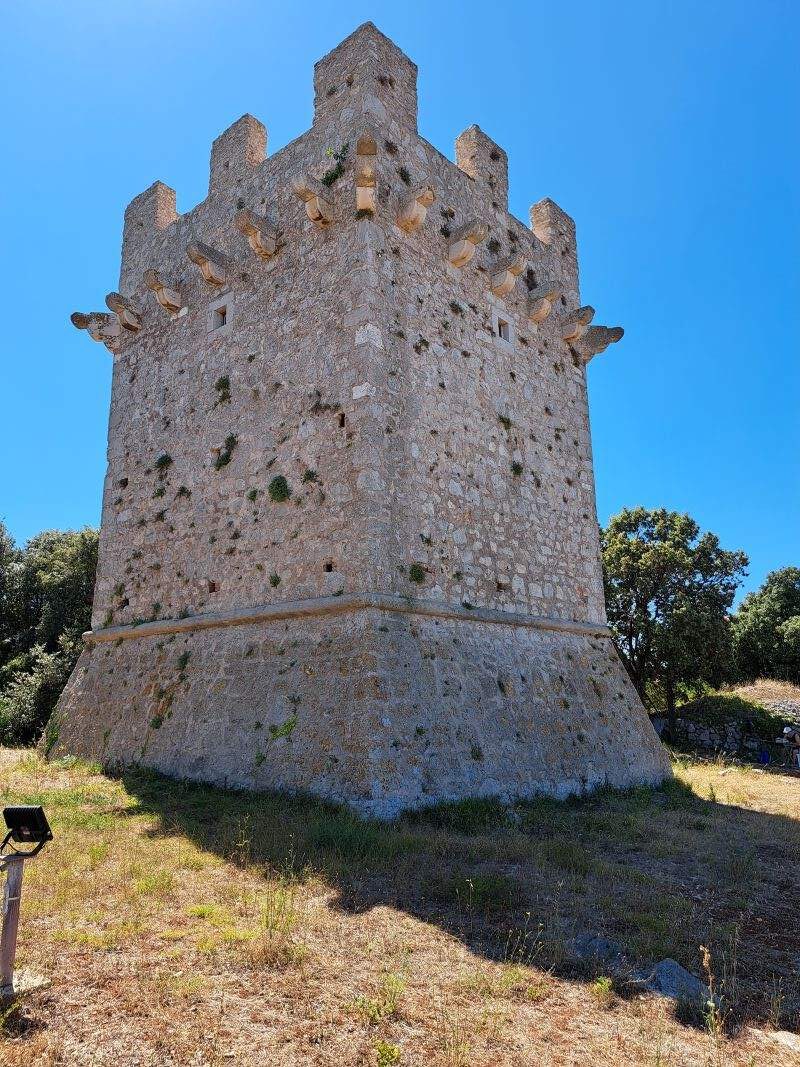
Pag Town was surrounded by walls and towers, with straight streets converging on a central square. The Church of the Assumption and the Ducal Palace became the main landmarks, symbols of both faith and governance.
Salt Production in the Middle Ages
Salt continued to dominate Pag’s economy. Venetian rulers understood its immense value and strictly regulated production. The salt pans near Pag Town, some of which are still in use today, became one of the most vital assets in the entire Adriatic region.
4. Venetian, Austrian, and Napoleonic Rule – Pag (City)
From the 15th to the 18th centuries, Pag was firmly under Venetian rule. The Venetians exploited the island’s salt, controlled trade, and strengthened defenses. However, life for locals was often harsh, as they were burdened by taxes and restricted freedoms.
In 1797, with the fall of the Venetian Republic, Pag came under Austrian Habsburg control. A brief period of French (Napoleonic) administration followed in the early 19th century, before Austria regained control.
Under Austrian rule, Pag saw modernization:
-
Salt production was mechanized.
-
Roads and connections to the mainland were improved.
-
Schools and administrative reforms were introduced.
This period, although marked by imperial oversight, laid the groundwork for Pag’s later integration into modern Croatia.
5. The 20th Century: Turbulence and Transformation
World War I and the Kingdom of Yugoslavia
After World War I, Dalmatia, including Pag, became part of the Kingdom of Serbs, Croats, and Slovenes (later Yugoslavia). This was a difficult time marked by economic instability and political unrest.
World War II
During World War II, Pag was tragically marked by the establishment of a concentration camp by the fascist Ustaše regime at Slana and Metajna. Many lives were lost, and these dark chapters remain part of the island’s memory.
Socialist Yugoslavia
After 1945, Pag became part of socialist Yugoslavia. While salt production and agriculture continued, tourism began to emerge as a new economic force. Roads, hotels, and ferry connections were developed. By the 1960s and 1970s, Pag was attracting visitors from across Europe, drawn by its beaches and unique landscape.
6. The New History of Pag: Independent Croatia – Pag (City)
With the independence of Croatia in the 1990s, Pag entered a new chapter. Despite the hardships of the Homeland War, the island quickly recovered and focused on developing tourism as its main industry.
Festivals and Nightlife
In the 2000s, Pag’s Zrće Beach near Novalja became an international hotspot. Clubs like Papaya, Aquarius, and Noa began hosting world-famous DJs, putting Pag on the map as the “Croatian Ibiza.” Music festivals such as Hideout, Sonus, and Fresh Island now attract tens of thousands of visitors annually.
Cultural Revival
Pag’s cultural treasures—lace, salt, lamb, and cheese—gained renewed recognition. Pag lace was added to the UNESCO list of Intangible Cultural Heritage, and Paški sir (Pag cheese) began winning international awards.
7. Modern Pag: Luxury and Lifestyle – Pag (City)
Pag today represents a balance between ancient tradition and modern luxury. While salt pans and lace workshops continue, visitors also enjoy exclusive accommodations, gourmet restaurants, and world-class events.
Boutique Villa Nirvana (Proboj, Pag)
This villa symbolizes Pag’s modern face. With stunning sea views and elegant design, Boutique Villa Nirvana offers guests a serene retreat that contrasts with the island’s rocky surroundings.
Boutique Villa Nirvana 2 (Proboj, Pag)
Close by, Boutique Villa Nirvana 2 combines contemporary architecture with maximum comfort. It caters to families, groups, and couples who want to immerse themselves in the island’s modern luxury while being surrounded by natural beauty.
Villa The Secret Diamond (Sv. Marko, Pag)
In Sv. Marko, Villa The Secret Diamond epitomizes exclusivity. Its panoramic location, stylish interiors, and private amenities make it a true jewel for travelers who seek both privacy and luxury on Pag.
These villas represent the new history of town, where tradition meets innovation, and where visitors can enjoy the island’s heritage while indulging in modern comforts.
8. Pag’s Future: Sustainability and Tourism – Pag (City)
As Pag looks ahead, sustainability is becoming a central theme. The island’s authorities and residents are working to preserve natural landscapes, protect cultural heritage, and develop eco-friendly tourism.
Projects include:
-
Expanding cycling and hiking trails.
-
Promoting local gastronomy and slow food.
-
Encouraging boutique tourism over mass tourism.
-
Protecting the salt pans and ancient olive groves.
Pag’s future lies in balancing its old history with its new role as a modern Mediterranean destination.
The history of town is a remarkable journey through time. From prehistoric hillforts and Roman towns, through medieval Venetian architecture and salt production, to modern luxury villas and international music festivals, the island has continually reinvented itself.
Pag’s story is not just about survival but about transformation. It is about how an island with rocky, barren land became a cultural and touristic jewel of Croatia. Visitors today can walk medieval streets, taste cheese made with centuries-old methods, party at world-class festivals, and relax in stunning villas such as Boutique Villa Nirvana, Boutique Villa Nirvana 2, and Villa The Secret Diamond.
Pag’s past and present blend seamlessly, making it a destination where history is alive and the future is bright.
Final Thoughts – Pag (City)
Pag is not just an island—it’s an experience. Whether you are a first-time visitor or a returning guest, the island has a way of surprising you with its beauty, energy, and authenticity. From the luxury of Boutique Villa Nirvana and Boutique Villa Nirvana 2 in Proboj to the exclusivity of Villa The Secret Diamond in Sv. Marko, Pag offers the finest stays for those who want nothing but the best.
If you are dreaming of a holiday that blends relaxation, culture, gastronomy, nightlife, and luxury, Pag is the answer. It’s a place where every moment feels extraordinary, and every view is a postcard.
Contact & Reservation
Blaž ☎️ +386 31 609 241 | elfabiiani@gmail.com
Jožica ☎️ +386 41 745 859 | jozica.fabjan@gmail.com
Martin ☎️ +386 41 745 733 | martinkambic@gmail.com
Boutique Villa Nirvana | Boutique Villa Nirvana 2 | Villa The Secret Diamond

Leave A Comment